Steel Cans
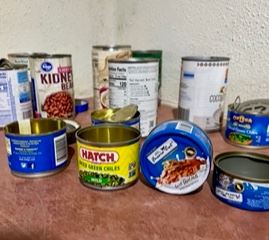
Steel cans, dating back to the 14th century, are one of the oldest forms of food packaging. They are used to package everything from pet food to vegetables to soup. Steel cans are often lined with tin (and thus sometimes referred to as bi-metal cans) to prevent rust and food contamination, but this does not affect the product's recyclability.
 Did You Know…?
- Steel cans are highly recyclable; about 65% of steel cans are recycled.
- Steel has the highest recycling rate of any material, at more than 88%. While this is mainly due to scrap metal such as cars, steel cans can be recycled into any steel product.
- Steel cans may be recycled infinitely with no loss of quality. Unlike glass, paper, or plastic, metal is in limited supply, putting extra importance on steel recycling.
- Two-thirds of all new steel manufactured comes from recycled steel; one-third must still come from virgin material.
*earth911.com
Prep Work to Recycle Steel Cans
- Most steel cans have paper labels, which will be removed during the recycling process. The paper is low-quality, and it is not worth your time to recycle it with other paper.
- Please rinse your cans to remove leftover food, keeping in mind that water is a precious resource. Rinsing will prevent your recycling bin from smelling and reduce the risk of animals attacking your recycling. Be careful of the sharp edges!
- Remove the lid (also made of steel) and insert it into the can. If stored outside, pinch or stomp the top to close it, preventing birds, cats, or other wildlife from putting their heads in the cans.
Recycling Steel Cans in Taos County
Steel cans are accepted for recycling at all Taos County Collection Centers. Do not mix steel cans with aluminum cans! There are separate bins for each.
Taos County does not have the personnel to sort cans. Steel contaminates the bales of aluminum at the processor, decreasing the value of aluminum for Taos County. A steel can is generally heavier than an aluminum can of the same size. Use a magnet if you aren’t sure whether a can is aluminum or steel. The price of aluminum is much greater than of steel!
NOTE: Spray or aerosol cans are not accepted for recycling because they are pressurized and often contaminated with paint. They are considered hazardous household waste (HHW) and can be disposed of in your household waste.
Some History
- Early tin cans were sealed by soldering with a tin–lead alloy, which could cause lead poisoning.
- A total ban on food cans with lead solder, including imported cans, became effective in 1995.
- In 1901, the American Can Company was founded in the United States, which at the time produced 90% of the country's tin cans.